
Perry County Criminal Court Records
The Perry County Circuit Clerk is the official record keeper for criminal proceedings held in District and Circuit Courts. Once charges are filed, the court record grows beyond the arrest event. It can include the charging paper, appearances, pleas, motions, hearing settings, rulings, disposition, sentence, financial costs, and later appeal activity. That complete chronology is what separates a criminal case file from a booking entry or an arrest report.
District Court generally handles misdemeanors and conducts work assigned to Alabama's limited-jurisdiction trial court. Circuit Court handles felony prosecutions and appeals from lower courts. Municipal offenses inside Marion may begin in Marion Municipal Court. The prosecutor for local criminal matters is the Alabama Fourth Judicial Circuit District Attorney's Office. Michael Jackson is listed as District Attorney on Perry County's official contact page.
Search Perry County Criminal Records
Alacourt Access provides paid on-demand access to Alabama trial-court records, including criminal records. A name search or case-number search costs $9.99. Case detail may include basic information, court action, case status, setting dates, parties, financial history, and a detailed action summary. Document images cost $5 for the first 20 pages and $0.50 for each later page.
- Open Alacourt and choose a name search or case-number search.
- Match the defendant and Perry County court before relying on the result.
- Read the charge list together with its current status and case actions.
- Locate the plea, disposition, and sentence rather than treating the first charge as the outcome.
- Contact the Circuit Clerk for omitted cases, older files, or a certified document.
The county docket search can check a setting date and optional last name, but it warns that some cases may not appear. Perry County criminal court records omitted online should be checked at the clerk counter in Suite 110 or by calling (334) 683-6106. The full charge-to-outcome trail is more useful than a single calendar line.
Perry County Criminal Case Stages
Each stage can add a dated entry or document to the criminal court record. The initial charging document identifies the accusation. Arraignment records the defendant's response. Pretrial work can add motions, rulings, settings, and negotiated changes. A plea or trial leads toward disposition, and sentencing records the punishment or conditions ordered after a guilty result.
Case flow: Charges Filed › Arraignment › Pretrial / Motions › Plea or Trial › Disposition › Sentencing
- Charges filed
- The formal accusation enters the court system and receives a case reference.
- Arraignment
- The defendant is advised of the charge and enters a plea.
- Pretrial and motions
- The parties file requests, the court issues rulings, and settings may change.
- Plea or trial
- The case is resolved by an accepted plea or tested at trial.
- Disposition and sentencing
- The record shows the outcome, sentence, and financial or release conditions ordered by the court.
Not every case reaches each stage. A charge may be dismissed, reduced, or otherwise resolved before trial. For the arrest and charging phase itself, the contextual Perry County arrest records and charges resource separates the booking-side record from the prosecutor's formal charge.
What Perry County Criminal Records Show
Alacourt describes categories rather than exposing a free sample Perry County case. The official field inventory therefore comes from its case-detail description and local court instructions. A criminal record should be read as connected fields. The case number anchors the file, the court shows jurisdiction, the charges identify accusations, the action summary orders events, and the disposition and sentence reveal the final recorded result.
| Field | What It Shows |
|---|---|
| Case number | The court reference used to locate the file and communicate with the clerk. |
| Court and defendant | The trial court and person against whom the criminal case was filed. |
| Charges | The alleged offenses as filed, including later changes shown in the record. |
| Setting dates | Scheduled appearances, hearings, or trial dates. |
| Plea | The defendant's formal response, which can change during the case. |
| Case actions | A chronological summary of filings, orders, and court activity. |
| Disposition | The outcome of the case or a particular charge. |
| Sentence and costs | The punishment, conditions, and financial history shown by the court record. |
A document image may supply detail missing from the index. Certified copies must come through the court clerk, and the local research did not find Perry County's plain-copy or certified-copy price. Search fees should not be confused with copy certification fees.
Perry County Charges vs Convictions
A charge is an accusation. A conviction is a guilty outcome through plea or verdict. A Perry County criminal file can retain charges that were later amended, reduced, dismissed, or resolved without conviction. Searchers should pair each charge with its disposition instead of reporting every filed count as a guilty result.
| Charge | Conviction | |
|---|---|---|
| Stage | Accusation | Verdict or plea |
| Burden of Proof | Probable cause | Beyond reasonable doubt |
| Possible result | May be changed, dismissed, or tried | Supports sentencing |
| How to verify | Read charge status and action summary | Read disposition, plea or verdict, and sentence |
Probable cause supports the early accusation or warrant process. Proof beyond a reasonable doubt is the criminal trial standard for conviction. A dismissal is not a conviction, and an acquittal is a not-guilty result after the charge is tested.
Read Perry County Case Outcomes
Disposition means the result of a case or charge. A reader should look for the text tied to each count and the date of that result. Guilty may follow a plea or verdict. Not guilty reflects an acquittal. Dismissed means the court ended that charge without a conviction. A plea entry and a sentence should be read together because the filed charge may have changed before the plea was accepted.
Sentence information may include custody, supervision, financial obligations, or other court-ordered terms when those appear in the record. Financial history can show court-account activity but should not be treated as a complete sentence by itself. If a code is unclear, the clerk can identify the official document, though the office cannot interpret its legal effect for a party.
Perry County Sealed vs Expunged
Sealed and expunged are not interchangeable labels. A sealed file is withheld from ordinary public access under a law or court order. Expungement follows Alabama's statutory petition process and directs eligible court and agency records to be removed from public access, subject to specific exceptions. Neither result occurs merely because a charge was dismissed or a portal entry is unwanted.
| Sealed | Expunged | |
|---|---|---|
| Public visibility | Withheld from routine public view | Eligible covered records are removed under the order |
| How it occurs | Law or a court order restricts access | A qualifying person petitions Circuit Court under Alabama law |
| Agency access | Depends on the authority and order | Some limited statutory or law-enforcement access may remain |
| Verification | Ask the court about authorization | Review the entered expungement order and statute |
The Alabama felony expungement statute addresses qualifying felony categories and limits.
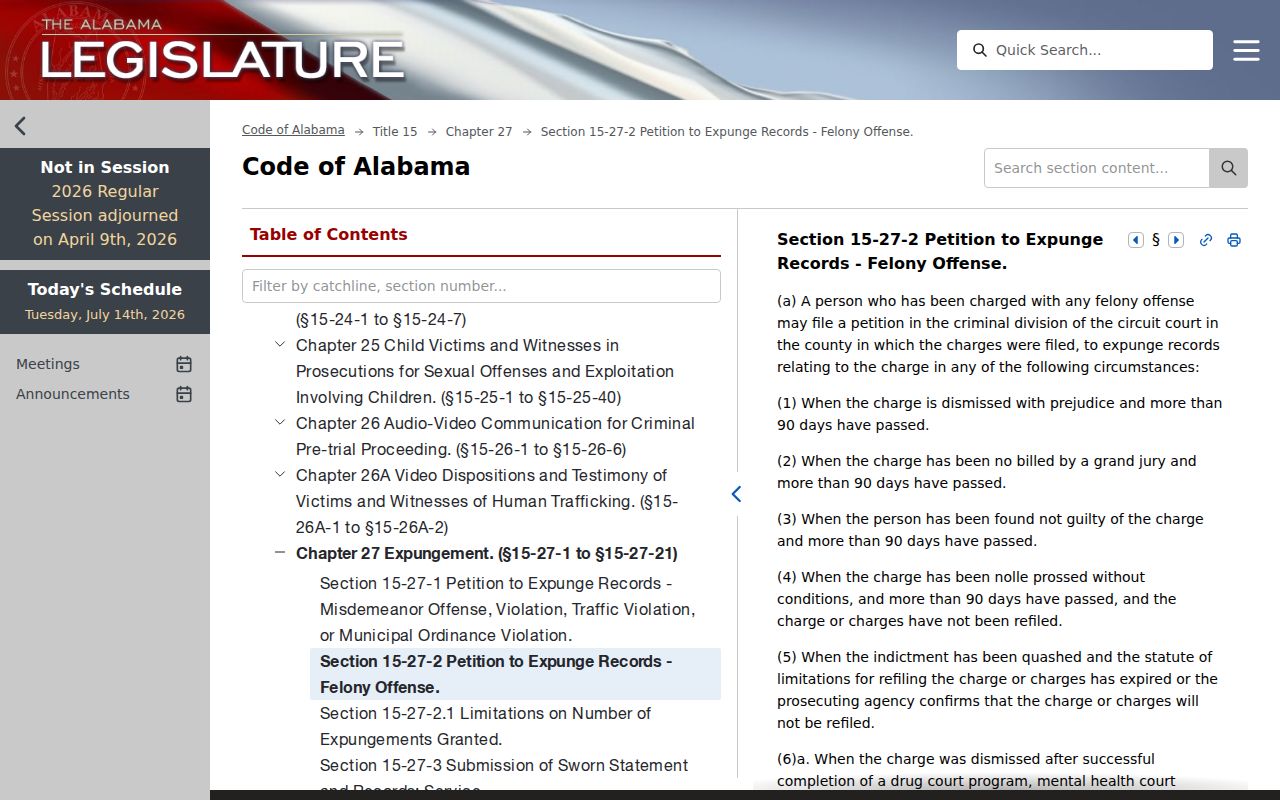
Eligibility is offense-specific, so a statute citation is a starting point rather than proof that a particular Perry County case qualifies.
The Alabama expungement-order effect statute describes what an entered order does to records.
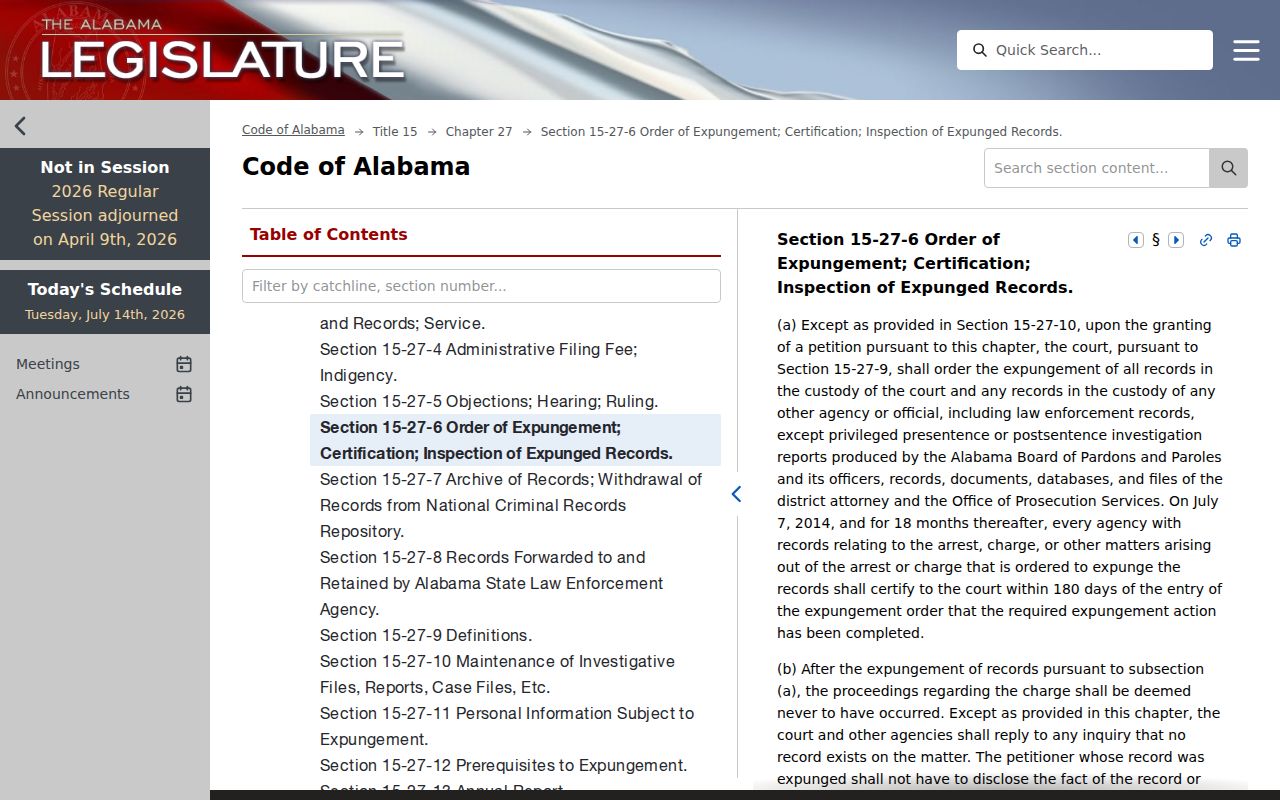
The order, not a private deletion request, directs the handling of eligible court and agency records.
Perry County Criminal Record Access
Alabama Code section 36-12-40 provides the general public-writings baseline. Criminal files remain subject to judicial rules, sealing orders, expungement laws, and confidentiality statutes. Juvenile records are not ordinary public files. Unserved warrants are also not public under Perry County's official magistrate guidance.
Key Statutes:
Alabama Code § 36-12-40 generally opens public writings unless another law provides a restriction.
Alabama Code § 12-15-133 protects juvenile court and law-enforcement records from routine public access.
For a public file that is older, absent online, or needed in certified form, contact the Perry County Circuit Clerk at 300 Washington Street, Suite 110, Marion. The direct number is (334) 683-6106 and published hours are 8:00 a.m. to 4:30 p.m.
Federal Perry County Criminal Cases
Federal crimes involving Perry County are filed outside the state trial-court system. Perry County is within the Southern District of Alabama. The U.S. Attorney's Office lists Perry among the district's counties, while federal case records are accessed through PACER rather than Alacourt. Appeals from the federal district court go to the Eleventh Circuit.
The U.S. Attorney's Office district source confirms the federal prosecutorial district that includes Perry County.
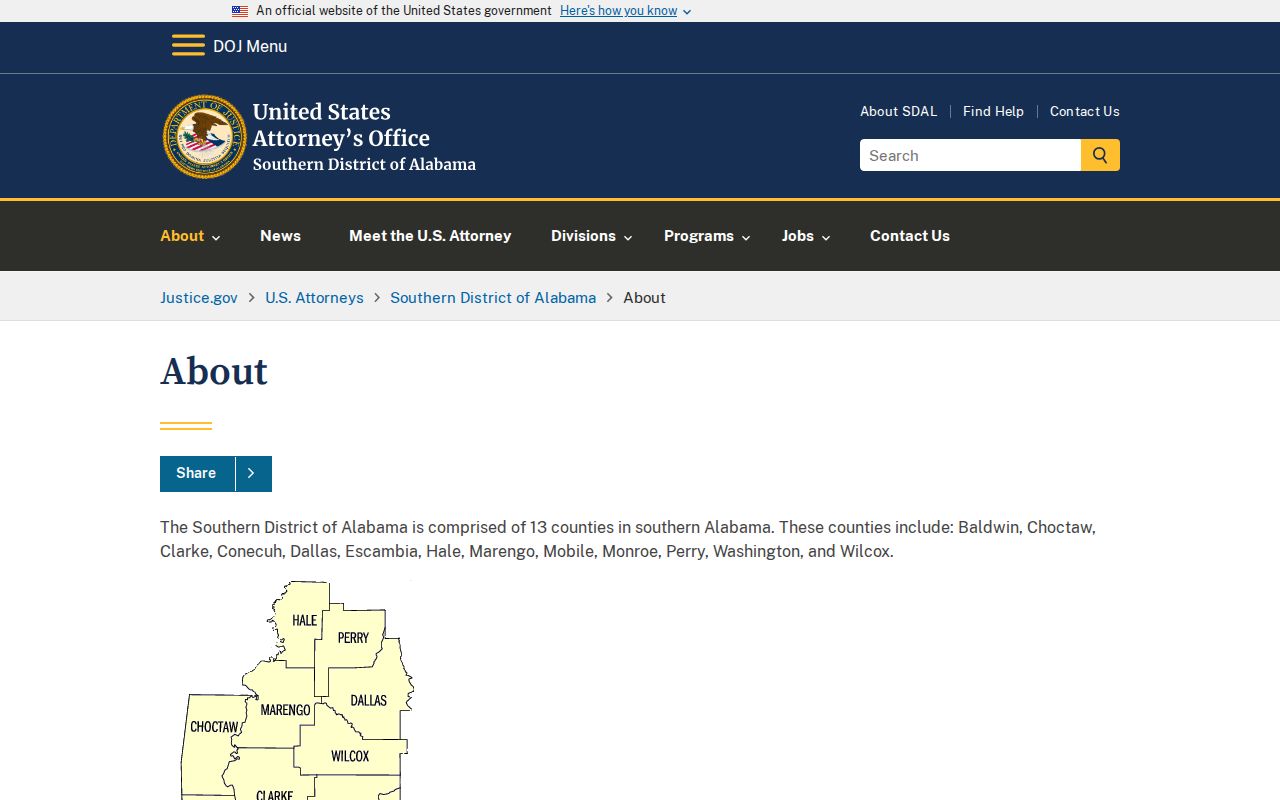
That office handles federal prosecutions, not Perry County District or Circuit Court cases.
The U.S. District Court for the Southern District of Alabama is the official federal trial-court source.
State and federal systems use separate clerks and dockets, even when the underlying events occurred in Perry County.
The Eleventh Circuit Court of Appeals supplies the federal appellate channel for Alabama.
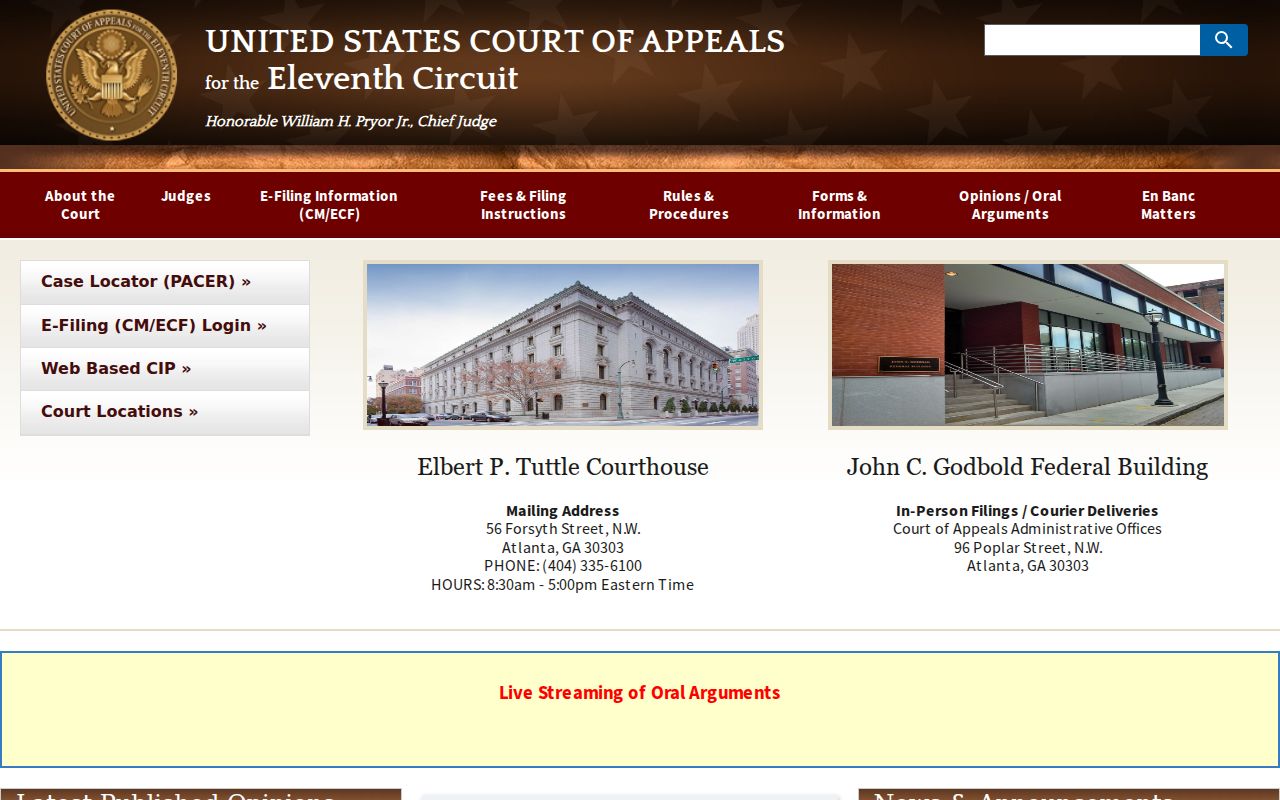
An Eleventh Circuit record concerns a federal appeal, not an appeal within Alabama's state appellate courts.
Restricted Perry County Criminal Records
Perry County juvenile delinquency, CHINS, and dependency records are confidential. Sealed and expunged cases do not appear as routine public files. Personal identifiers, protected account data, and minor-identifying information may be removed from otherwise accessible documents. An ongoing investigation can also contain law-enforcement material that is not part of the public court file.
Restrictions should not be read as proof that no case ever existed. They mean the record is controlled by a confidentiality law, expungement order, sealing order, or other access rule. A person seeking access must use the court process that applies to that category. Circuit Clerk Mia Jacobs-Turner can identify filing procedures but cannot provide legal advice. Sheriff Roy Fikes and the Perry County Sheriff’s Office hold the law-enforcement side, while the county District Attorney channel identifies the prosecutor. The court file remains at the Perry County Courthouse.